
Invisible Corfu
Vignettes of Corfu and a travel writing prompt
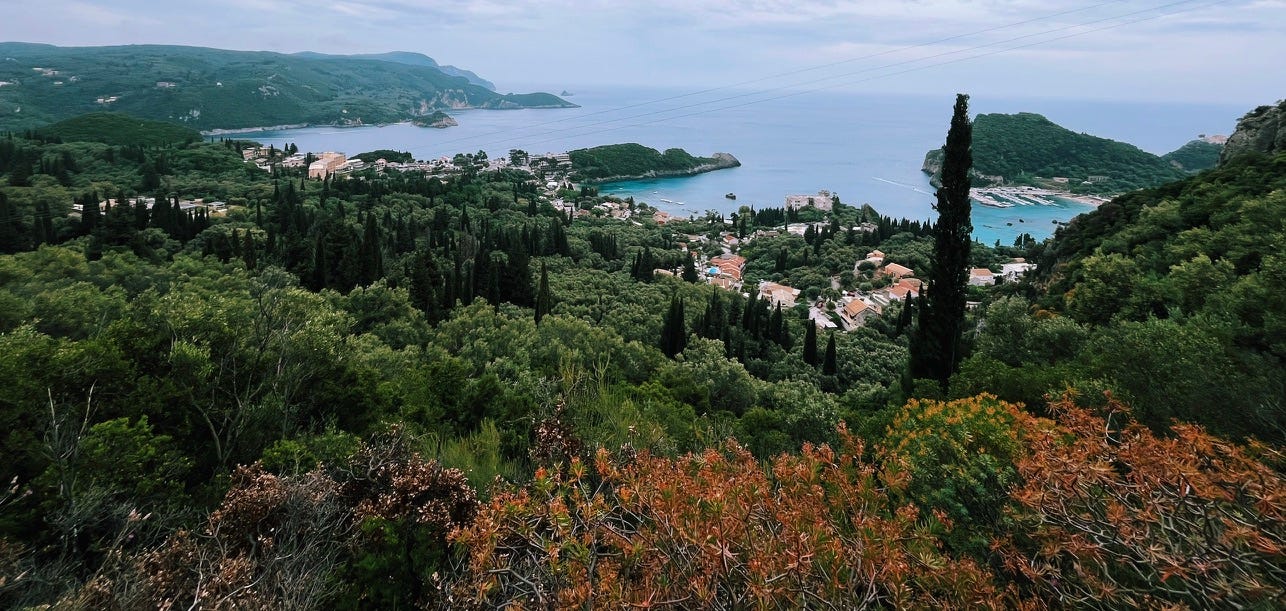
My wife and I are back from two weeks in Europe—a week in Corfu, and about a week in Paris, for our twentieth anniversary. Two very different destinations: a sleepy Greek island versus the epicenter of European civilization. The Paris half requires its own post.
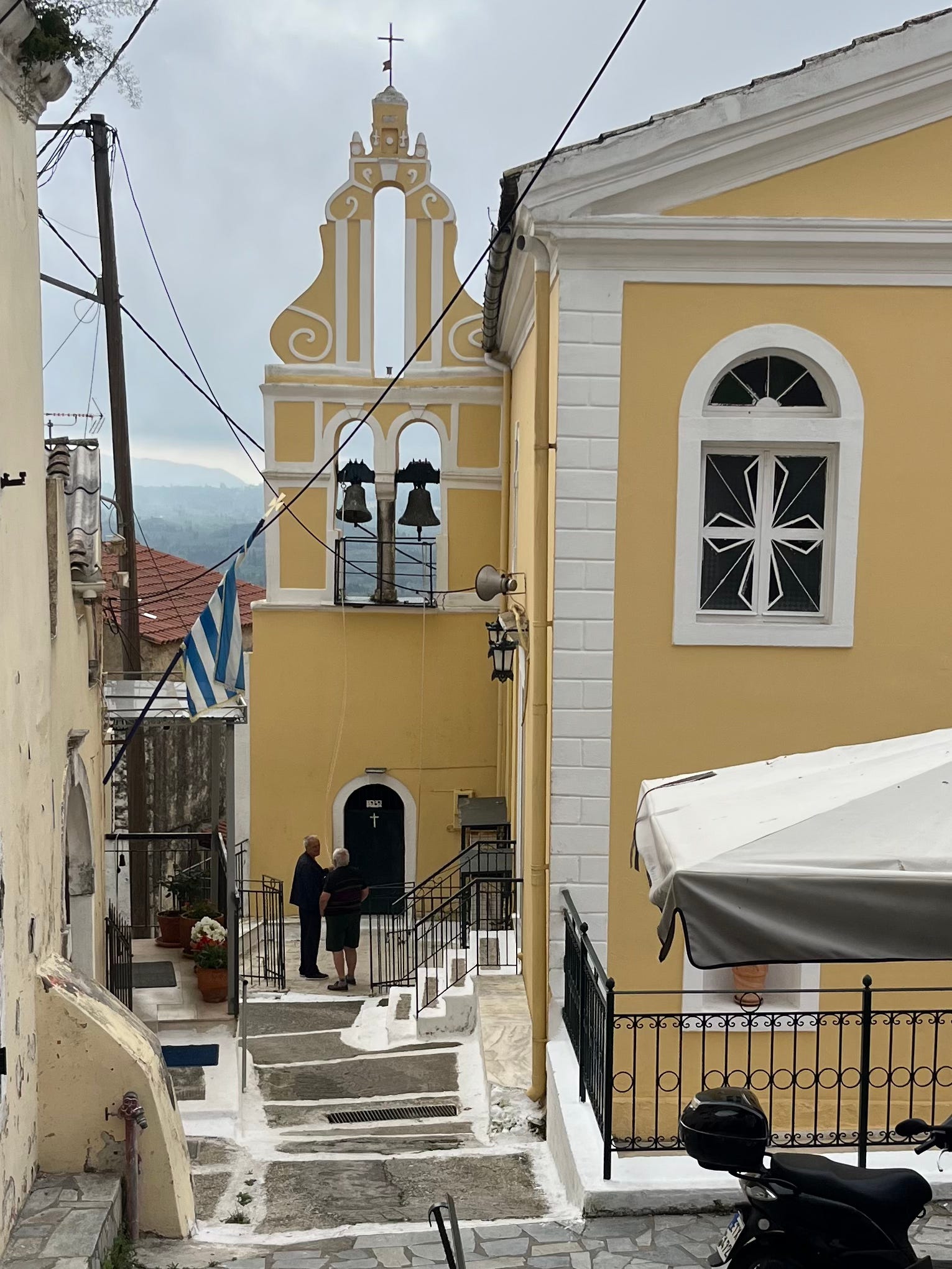
But for Corfu I can report that it is green and topographically pleasing. This was a hiking trip. We trekked up and across the island, going from village to village on the Corfu Trail.
Hiking 13-15 miles a day was tiring! I did little writing. But I picked up Calvino’s Invisible Cities in the airport and was inspired by his fantastical (re)presentation of cities. It made me wonder what would I write if I wanted to capture the feeling of Corfu’s villages and towns.
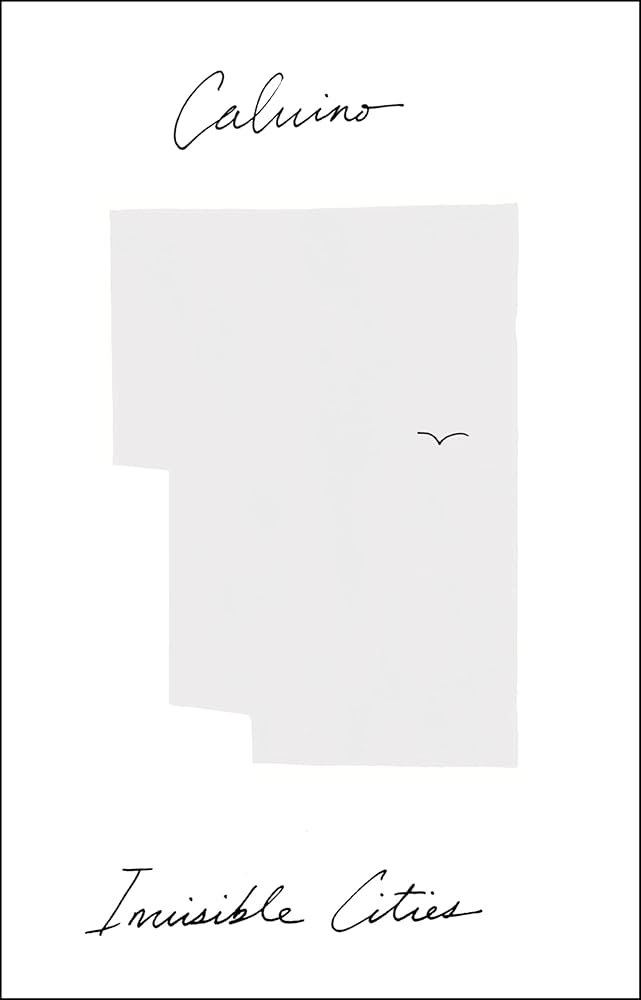
Calvino:
Cities & Memory 1
Leaving there and proceeding for three days toward the east, you reach Diomira, a city with sixty silver domes, bronze statues of all the gods, streets paved with lead, a crystal theater, a golden cock that crows each morning on a tower. All these beauties will already be familiar to the visitor, who has seen them also in other cities. But the special quality of this city for the man who arrives there on a September evening, when the days are growing shorter and the multicolored lamps are lighted all at once at the doors of the food stalls and from a terrace a woman’s voice cries ooh!, is that he feels envy toward those who now believe they have once before lived an evening identical to this and who think they were happy, that time.Cities & Desire 1
There are two ways of describing the city of Dorothea: you can say that four aluminum towers rise from its walls flanking seven gates with spring-operated drawbridges that span the moat whose water feeds tour green canals which cross the city, dividing it into nine quarters, each with three hundred houses and seven hundred chimneys. And bearing in mind that the nubile girls of each quarter marry youths of other quarters and their parents exchange the goods that each family holds in monopoly–bergamot, sturgeon roe, astrolabes, amethysts—you can then work from these facts until you learn everything you wish about the city in the past, present, and future. Or else you can say, like the camel driver who took me there: “I arrived here in my first youth, one morning, many people were hurrying along the streets toward the market, the women had fine teeth and looked you straight in the eye, three soldiers on a platform played the trumpet, and all around wheels turned and colored banners fluttered in the wind. Before then I had known only the desert and the caravan routes. In the years that followed, my eyes returned to contemplate the desert expanses and the caravan routes; but now I know this path is only one of the many that opened before me on that morning in Dorothea.”
I like the long sentences, the continuous present tense, the motifs stretched to nearly-absurdity. More than that, I like how natural a way, it seems to me, this might be to write about a place as a traveler, as it focuses on a place’s essential feeling. I can imagine and feel these cities by how Calvino describes them, despite having no facts or physical description.
I tried it for a couple Corfu villages, though I’m got nowhere near as fantastical (or fantastic) as Calvino:
Asprokavos
In Asprokavos is a man who runs the only good taverna in the village, who, on nights when the taverna is almost empty, pours extra glasses of wine for travelers and says “You are lovely people” over and over, and later explains he’s a farmer and how the taverna pays for the farm, and how much he loves hiking and trees. The food is prepared by a woman working silently in the back. His daughter-in-law or cousin or some young relation has convinced him to install artificial turf like a golfing green on the wall behind the bar to give the space a trendy vibe, though its the most traditional taverna on the island. There, at the start of the trail, hikers stumble to their hotels after dark, full of expectation. In the morning they will struggle over hills and roads with potholes filled with hand-sized stones and broken tile, will pass through groves where old men shoo their barking dogs and shuffle along the ridge, eyes full of years in the sun. They don’t look at you there, nor at where they’re going, and their thoughts grow old with the olive trees, the trunks of which twist in and far away.
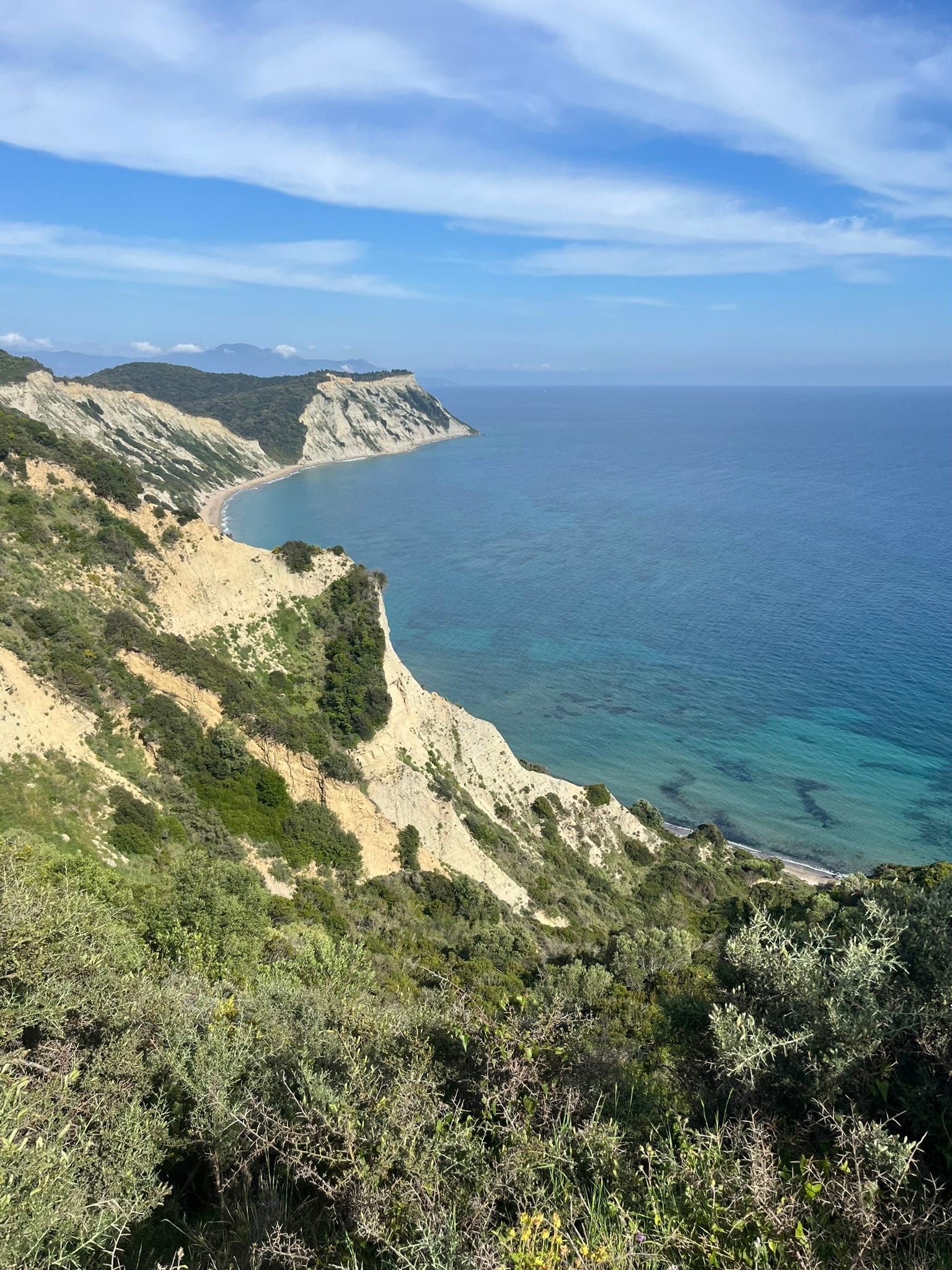
Paramonas
By the time I am old I hope I have learned to smile, wrinkles around my eyes and across a face bronzed from work in the sun, prepared to answer any question, like the Corfiot who runs Skala Pension, who scoffs when asked on a night in May, “Will the tavern be open this evening?” He shakes his head. “Where else would the people eat?” There are a half dozen icons set in dark wood with the gold leaf flaking off on a shelf behind the bar above the whiskey and amaretto.
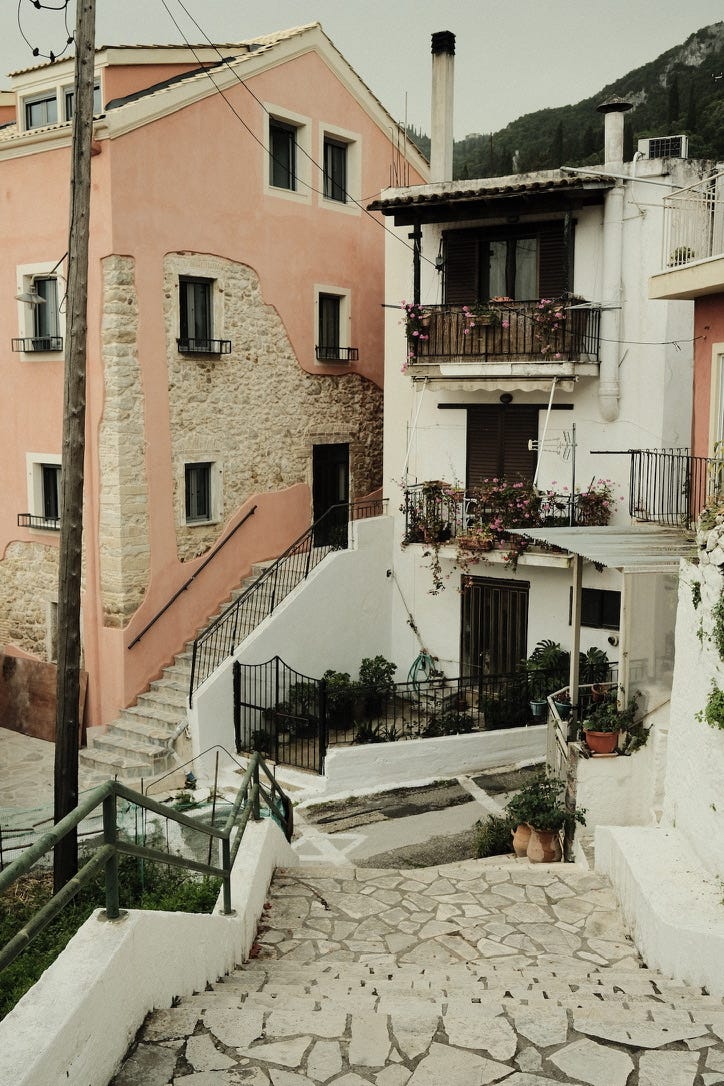
Pelekas
Pelekas is up a hill two kilometers from the beach. One street cuts through to the next village and it hairpins as it ascends sharply on the ridge. At this hinge is the village square, with a church, a bakery, and a cafe. Down the block from there is a mysterious building with a sign of a witch on a broomstick flying somewhere at night. The witch wears black, like the priest’s wife, who trudges to her apartments after Vespers, hips locked. Above her black frock and shin-length skirt, the same worn by every presbytera, her locks of white hair crest in waves. The way she walk shows how proud and full of love she is, proud of how up-to-date her husband’s service books are. Her husband, though old, stands tall, his cassock fringe lightly brushing the street. The sun sets in Pelekas behind a rocky cliff, which breaks the light into red petals soft and numerous as elephant tongues. On some evenings clouds draw their tassels across the stars and refract the rays further out, to sink into the wide Mediterranean. The sky changes from bright to medium to somber blue, then to violet, and at last to musical black. It joins the presbytera in her slow walk up the path, into the depths.
Are you traveling this summer? Try sitting in a cafe or on your hotel balcony and writing a “Calvinian” description of the place. If you write a few “invisible cities,” send them to me to read!
Beautiful! Funny - I am including excerpts from invisible Cities in my summer class. Also a great writing prompt!